Maintaining Your Equipment: Tips & Tricks from the Pros”
As a business owner, keeping your equipment in good shape is key to staying efficient and reliable. I’ve learned that regular maintenance and knowing when to upgrade or replace tools can save a lot of headaches down the road. What are some of the tools or equipment you can’t run your business without? And how do you keep track of maintenance or repairs?”* Maintaining your equipment is essential for keeping your business running smoothly. Over the years, I’ve learned that regular maintenance and staying on top of repairs can prevent costly breakdowns and delays. Some of my go-to tips are scheduling monthly check-ups, keeping track of warranties, and having a solid backup plan for when equipment goes down unexpectedly.156Views2likes1CommentMilwaukee vs DeWalt Tools, which one?
We’re Lock Nerds Locksmith, a Buffalo, NY-based company that’s always relied on Milwaukee tools. But we’re curious—what tools do other pros trust? We're looking for honest pros and cons between Milwaukee and DeWalt to see if it's time for us to reconsider our setup.1.4KViews6likes21CommentsYou Quit Your Job to Start a Business — So Why Gamble on a Used Truck?
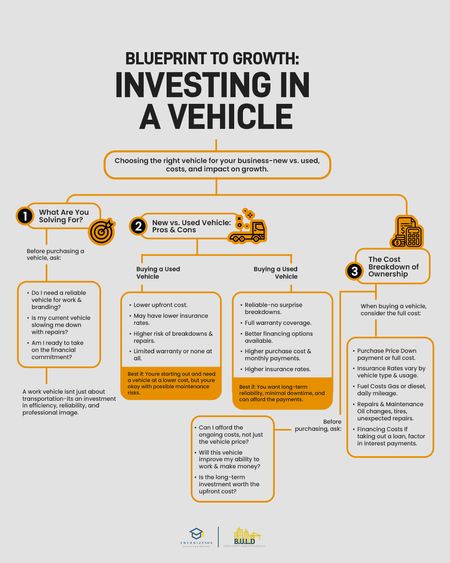
Everybody says the same thing: “Just buy a used truck, it’s cheaper.” Yet, That same truck breaks down 3–6 months later. Now your jobs are delayed. You’re borrowing vehicles from your spouse or rental. You’re stressed out and behind on bills. And suddenly the “cheaper option” is costing you way more. Here's my personal take: You quit your job ... You are betting 100% on yourself, to care for your livelihood. If you’re betting your whole future on this business — why risk it with a vehicle that might leave you stranded? I hate blaming others, or the lack of accountability. So if I can control one variable — like my ability to show up to the job, that will pay me for my services... I’m going to do it. But that's just my opinion. My hot take, What do you all think? I created this visual for myself to follow and share whenever anyone is deciding to get a vehicle.400Views1like4CommentsNew, Used, or Lease? And WHEN?
As a small business owner it has been nothing short of challenging to build a business from nothing. I came from nothing and have built this thing from the ground up. I didn't have a lot of money. When I first started I couldn't afford company vehicles. I eventually bought used vehicles in the $20K-$30K range and financed them and that was fine until I unexpectedly slowed down and had to sell off my trucks just to survive. Once I rebuilt from the slow down I decided to buy used vans around $9K to $10K cash. Right now I have 6 vehicles. One of those vehicles needs major work done. And the others are all 100K miles or more and I feel like they are just ticking time bombs. I want the reliability of newer, or leased vehicles but the risk intimidates me after my struggles in 2022. Is there a formula for when you should go from paying cash for used, to financing newer/new, and to finally leasing? Is there a revenue metric, a number of vehicles in your fleet, or some other sign that going one route over the other is more advantageous or less risky? Thanks for taking the time to read this and share feedback!Solved558Views2likes9Comments
Hi Jobber Community,
We’re in the early stages of growing our stump removal business and looking to expand our equipment. I’m currently sourcing a reliable used stump grinder (walk-behind or towable, 14–20 HP range) and would really appreciate any tips or recommendations on: Trusted websites or equipment dealers you’ve used Local auctions or dealer networks that work well for landscaping equipment What to watch for when evaluating a used grinder (wear, engine issues, etc.) If you’ve had good luck with certain brands or models—or know where to find solid secondhand machines—I'd love your input. Thanks in advance for helping us make smart, safe investments as we grow! Best, Kristian Postl A&P Stump Removal and Lawn Care244Views0likes1Comment