What's the best way to do job costing?
Hello everyone, I have been inconsistent with adding expenses to each job. How are other jobber users adding expenses to each job to see your profitability per job? Are you having your techs keep track of parts/fittings used on a separate form and then adding that to the job after the job has been completed? Trying to find an easy way to keep track of this and get it entered into jobber. Thanks Ernie447Views2likes9CommentsWhat marketing channel works best for you right now???
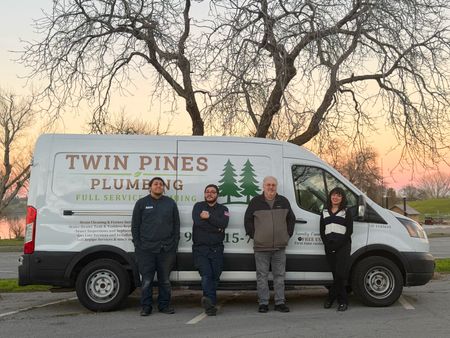
Hello, We are currently evaluating our marketing strategy to improve lead consistency and build deeper community trust. While we currently use Yelp, we find the results inconsistent and often attract price-shoppers rather than long-term clients. :( Moving forward, I would like to pivot our focus toward community-based marketing, such as sponsoring local schools and Little League teams. These sponsorships build the kind of long-term goodwill and trust that ensures local homeowners think of us first during emergencies. To clarify our strategy, we are avoiding the following channels: - Lead Aggregators (Angi, Networx, HomeAdvisor): These platforms sell the same lead to multiple contractors. The requirement to respond within seconds to avoid losing the job—while still being charged—does not align with our workflow. - Yelp for Major Projects: Due to high cost-per-click metrics and a high volume of price-sensitive inquiries, we find this to be a low-return channel for larger plumbing jobs. Your Friendly Neighborhood Plumbers,360Views3likes15CommentsAre You Building a Business or Just Creating Yourself Another Job?
It’s easy as a small business owner to get caught up doing everything yourself. At what point do you start delegating, hiring, or putting systems in place so the business can operate without you being involved in every job? I’d love to hear how other owners are making that transition while still keeping quality and customer service high.194Views1like5CommentsThose who charge for inspections, do you have a flat rate or does it depend on the property?
I recently got a request for a rodent assessment for a house that is about 10,000 sqft, an absolute monster of a house with 6 levels, a 4 car garage (buddy has a McLaren 750S, Porsche 917, Ford GT and a Range Rover!!!), vehicle lifts, elevator, separate chef kitchen, indoor pool...the works! I told the homeowner my standard fee for a more modest sized house, and that I would have to triple that to be able to spend the time at their home and not feel rushed. They did agree and made no issue out of it but it did make me wonder how other people approach this. Then I found the issue areas and they were about 3-4 times as many as a regular house and the cost reflected that. More doors, vents, cracks, holes, utility lines...it was insane. Should I have kept the inspection charge the same knowing I would find many many more holes or was it smart to up the inspection charge?93Views2likes2CommentsWhat’s Your Target Gross Margin vs. Actual Net Margin? Let’s Benchmark.
In home services and contracting, top-line revenue gets all the attention, but net profit pays the bills. Many trade operators aim for a 40–50% gross profit margin to retain a healthy 15–20% net margin, but actual figures vary significantly based on team size and trade complexity. A standard healthy benchmark breakdown often looks like: Cost of Goods Sold (Direct Labor + Materials): 50–60% of revenue Overhead & Operating Expenses: 25–30% of revenue Net Profit Target: 15–20% of revenue I’d love to benchmark with the community: Are you hitting your target net margins consistently as you scale, or is overhead creeping up faster than revenue? Where are you seeing the biggest pressure on your margins today?264Views2likes14CommentsShould customers pay more if they refuse auto-pay?
Auto-pay saves a lot of admin time in a recurring service business. Manual billing sounds simple until invoices sit unpaid, cards fail, reminders pile up, and someone has to decide whether to pause service. That extra follow-up has a cost. I don’t think every customer who avoids auto-pay is a bad customer. Some people just prefer more control. But if one customer requires more billing work every month, should they pay the same price as someone on auto-pay? I’m starting to think manual billing fees make sense. Something simple like: “Auto-pay is included with monthly service. Manual invoice payment is available for an added admin fee.” Do you require auto-pay, charge more for manual billing, or let customers pay however they want?22Views0likes0CommentsService Agreement Ideas for Project Based Businesses
This one has got me racking my mind. One thing they always talk about when you are building enterprise value in a business is having predictable revenues. I think for something like window washing, lawn care, poop scooping etc it'd be easy to have predictable revenues because it's pretty straightforward to have a re-occuring service agreement. But what about us GCs? I originally thought I could get people with a membership for a percentage off jobs. This seemed like a good idea till the first two people to sign up only did so because they had large $40k plus jobs so it was a no brainer (it paid for itself 2x over). If I tried to make the percentage off smaller, it wouldn't be enticing enough to get people interested. Let's brainstorm here guys - what can a general contractor do as a monthly or quarterly service to get in to the service agreement game?103Views1like2CommentsWould you fire a difficult customer even if they spend a lot?
I have this one custome who is very very supportive of what I do but can be very difficult ALL THE TIME, even when I do every thing the way he likes it its never up to par and there's always something thats wrong. It can be difficult at times specially when Im pressed for time and have other customers waitingSolved275Views1like12CommentsValuing a Trades Business — What's Your Experience?
I've been having some conversations lately about what a small trades company is actually worth — and I'm getting different answers depending on who I talk to. Some people say 1x annual gross revenue is the standard for a well-run trades business. Others say it's more like 2–4x EBITDA (net operating profit). And for a breakeven company with good employees and solid clients but no retained earnings, both methods produce very different numbers. A few questions for the group: Has anyone here bought or sold a trades business — or seriously explored it? What valuation method did you actually end up using? How much does systemization affect the number in your opinion? Does a business running on Jobber with SOPs, long-term employees, and documented processes command a premium over an owner-operated shop where everything lives in the owner's head? If you were bringing a friend or colleague into your business as a part-owner — someone who brings clients, crew, and vehicles — how would you structure that deal fairly for both sides? Would love to hear from anyone who's been through this — buyers, sellers, or people who've taken on a partner. This stuff doesn't get talked about enough in the trades.118Views1like3Comments