Forum Widgets
Recent Discussions

Budget
Hello, Any suggestions on a budget app? I wanted to use the Every Dollar app for my landscape business. My current bank will not connect to the app. I changed banks last year so I could connect Jobber. I really don't want to change again.TeamLegacy20206 hours agoContributor 21.3KViews3likes9Comments
How do cleaning businesses automatically track job costing and profit margins for recurring clients?
Hi all! In our cleaning business we have a lot of recurring clients with lots of visits for the same job. 85% is recurring and 15% one off jobs. however, the reporting options for job costing and profit margins for recurring jobs are not as good as the one off jobs. there are integrations that will pull live data from jobber and push into google sheets for example - but only using the triggers “job closed” or “job updated”. As most of our jobs never close, we are looking for a visit-based data pull that functions automatically. I have a google sheets dashboard with metrics based on the visits report, but requires Manual data pull daily to track performance. any suggestions? cheers!NicklasSnede8 hours agoContributor 2266Views0likes5Comments“Your prices are probably too low.” 💸
Winning almost every job you quote? Gabe Chrismon (Oply) says that could be a sign you’re charging too little. More jobs can keep you busy, but the extra driving, paperwork, and labor can eat into what you actually take home. 💬 Comment below: Have you ever realized you were charging too little? How did you know, and did you raise your prices? In this Masters of Home Service episode, Gabe shares the hidden costs of taking on more jobs, how to test higher prices with new customers, and ways to explain an increase to longtime customers. Never miss an episode of Masters of Home Service. Subscribe on Apple, Spotify, or wherever you get your podcasts. 37Views0likes2Comments
Ask-an-Expert: Ask a CFO Anything About Your Numbers (2 Days Only!)
Got a money question you've been sitting on? Drop it here. Hey I'm Paul Maskill, founder of Blue Collar Business Advisors. I scaled and exited my own electrical company, and now I work as a fractional CFO for home service businesses. I help owners build steady cash flow and predictable profit. This week, I'm hosting a free webinar: 8 Year-End Financial Myths Costing Your Business Money Oct 22 | 11:00 AM ET This thread is an open AMA. If it's about the money side of your business, ask it! Pop your question below in the thread. I'll answer here on Oct 22–23, right after the session. Can't make the webinar? Ask anyway! Not sure where to start? Here's what owners ask me most: Should I actually buy that truck before December 31? How do I know if my prices are high enough? How much should I be paying myself, and how do I get there? Are automatic January raises hurting my margins? What should I talk to my CPA about before year-end? Do I need more leads, or do I need to close more of the ones I already have? P.S. The more specific you are, the better my answer can be. Share your trade, team size, or rough numbers, but only what you're comfortable posting. I'll be answering Oct 22–23, and the thread closes Oct 23 at 5:00 PM ET. I'll work through the oldest questions first. If there's a problem in your business, waiting for January won't fix it. Ask it today.Paul_Maskill5 days agoContributor 390Views3likes3Comments8 Year-End Financial Myths Costing Your Business Money
Attn: Jobber Community It's about that time to be thinking about year-end...and many home service business owners make the wrong move (or no move at all). Join me on October 22nd at 11am ET where I am collaborating with Jobber to discuss 8 Year-End Financial Myths that could be costing your business. Sign up today (link below). PS If you register and attend live, there's a chance to win a $50 gift card. See you there! https://www.getjobber.com/events/year-end-financial-tips/38Views3likes0CommentsWhat is a good Business Credit Card to have for our line of work?
Hey Jobbers: I'm in the 7th month of business and things are going quite well, but I've been thinking of trying to get my purchases to work of me. Often times credit cards will give perks for cash back or rewards points depending on the purchases that one makes. In our line of work, purchases are pretty out of the norm to other business on a day-to-day basis. I've been doing some research of different programs, but the ranked lists seem to be sponsored by banks, like usual. Hard to trust biased articles. I was wondering if anyone had personal experience/ good recommendations for a credit card that is geared towards Home Services/Handyman companies. Thanks in advance, Think N TinkerTNTasks15 days agoContributor 31.8KViews4likes12Comments
What's the best way to do job costing?
Hello everyone, I have been inconsistent with adding expenses to each job. How are other jobber users adding expenses to each job to see your profitability per job? Are you having your techs keep track of parts/fittings used on a separate form and then adding that to the job after the job has been completed? Trying to find an easy way to keep track of this and get it entered into jobber. Thanks ErnieErnie17 days agoContributor 3537Views2likes10CommentsWhat is Jobber Bookkeeping and is it right for my business?
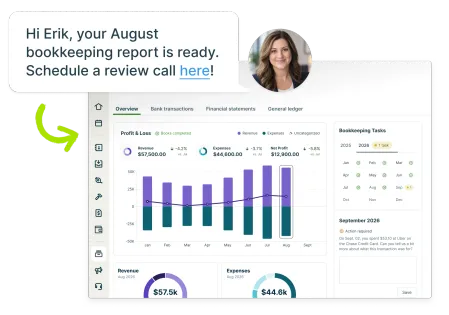
Jobber Bookkeeping is done-for-you bookkeeping, built right into Jobber. You get paired up with a dedicated bookkeeper who handles it all — they categorize your transactions, reconcile the accounts, close your books, and prepare your monthly financial statements within five days of month-end. They're available via SMS or email for everyday support and you can schedule regular video calls to walk through your numbers together, so they can explain exactly what they mean. It's a great fit if any of these sound familiar: You're busier than ever, but you're not sure if last month was actually profitable. You do your own books in the evenings (or you've been meaning to). You only see your numbers once a year, when your accountant does your taxes. You're making decisions like pricing, hiring, and buying equipment based on your gut rather than real, trusted numbers. Have questions? Click on ‘Bookkeeping’ in the left-hand menu and book a demo to talk to someone on our team. Don't see Bookkeeping in your account? It’s not yet available for businesses operating outside the United States, franchise and franchisee accounts, or Jobber Ambassador accounts. What's one decision you've been putting off until you "know the numbers"?MonicaBiesok19 days agoJobber Product Team50Views0likes0Comments
How do you actually track job profitability (not just revenue)?
Quick question for other Jobber users — when you want to actually know how profitable a job was (after labor and expenses, not just the invoice total), or how your crew's utilization looks over a month, how do you currently figure that out? Pulling into Excel? A separate spreadsheet? Just gut feel? I'm curious whether this is a real pain point or if I'm overthinking it — trying to understand how people actually track profitability day to day.aravind16920 days agoContributor 2443Views2likes10Comments


Tags
- getting paid54 Topics
- accounts receivable47 Topics
- profit margins46 Topics
- pricing strategies43 Topics
- costing41 Topics
- how much to charge36 Topics
- financing35 Topics
- accounts payable32 Topics
- processing payments30 Topics
- general contracting24 Topics