How Do You Roll Back a Major Change?
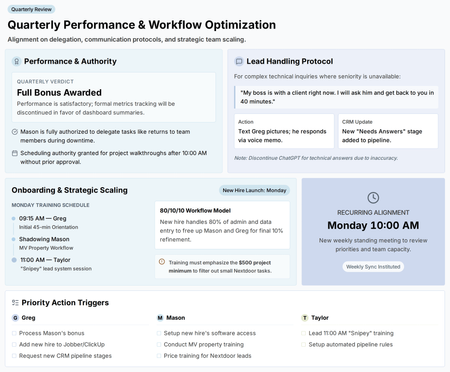
Have you guys ever made a major organizational change then needed to go back? This last year I tried to help buy back some of my time and created a Project/ Operations manager position so I could focus on sales and marketing. It's been a bumpy road to say the least. I first tried to hire two guys from outside the organization, I really thought I did my due diligence but it didn't work out with either of those guys. One guy I learned after a week (lol) the other took me a month and a half. On our third guy, I promoted from within and it seemed like it was working but here we are almost two full quarters in and we have less capacity because I haven't been successful in finding a replacement for him in the field, and we are making less money on jobs because ... well it's a combination of things but he might not be a fit for the position. I'm thinking I need a more decentralized approach since essentially we are at the same revenue number as last year when we didn't have his big overhead position. So the question is - how do you roll that back? Is it possible to make a change like that without alienating the person I'm demoting? Would it be easier to demote if I'm citing financial and structural changes for the company? What's ya'll take on that.79Views1like3CommentsHow to Know Everything About Everything
Anyone else feel like this needs to be you? You need to know how to market, how to manage people, how to properly incentivize them, be well versed in finance as well as all the technical aspects of whatever trade you are in. We had a situation where we were installing a lighted niche, and the specific tile made it impossible to get the tiles perfectly flat while installing it on the wall, and my guys put the light too far back so it cast a very minor shadow in the niche. In hindsight we could have installed the tiles in the niche ahead of time so we could apply proper pressure to them so there's no lips (and also put the light more forward) ... we won't make that mistake again! As I sit in the office making meta ads, reviewing my financials, it get's super frustrating to have these technical curveballs while sorting through everything else it takes to run a business. This is why we need to build our own checks and balances: Who we call or who we hire (have a good process for vetting people that know what they are doing) What we double check and when Who's the second set of eyes (use your in field managers, make sure everyone is using Jobber for pictures and notes Which leads to what you document Now the niche issue won't ever happen again but we've definitely caught things BEFORE they are a mistake utilizing this system. How to you juggle all the responsibilities?70Views1like2Comments
First timer here!
Greetings community👋🏿 . I work professionally in IT infrastructure and engineering, mostly around identity and access management, endpoint, automation, and improving how different enterprise systems work together. In my free time im usually building or researching something. I’m interested in Saas tools, ai automation, open data, business ops, and finding better ways for systems to talk. I like taking real-world problems, digging into how the existing workflows actually work, and experimenting with ideas or small projects to see if there’s a better approach. I here in the Jobber Community because I’m interested in learning how real people use Jobber and other field services tooling.. what works well, where workflows bottleneck, and new builds/integrations. Looking forward to learning from you all and contributing where I can!!110Views4likes8CommentsHow Often do You Enforce the Fine Print?
In our contracts, it clearly states that if the scope changes and we are not able to do the visit, or if we are sent away for reasons outside of our control we will charge them $300 (for reference our min charge is a half day which is $500). I had a customer who's assistant asked us to install an undermount sink. It was in the contract, they signed it. We had done a visit with them months before and our technician mentioned a top mount sink would be easy but they specifically asked for an undermount. So we order the sink, show up and the owner not the assistant that coordinated the contract) says they want a top mount. Our technician says ok we'll have to come back. We tell them the charge for the new sink plus the cancellation and they think it's unreasonable. I definitely know, no one actually reads the contract. Should the technician have said, if you send me away, it's $300 charge extra. But they also are changing the plan. I'm a softee so I'm not going to charge them the cancellation but what do you think about a situation like that? Maybe the cancellation charge is too much? It's basically enough for me to give the technician something for planning their whole day around the job plus make a very small amount of profit. Thoughts?26Views0likes1CommentRemodelers - What Kind Of Job Take Off Form Do you use?
We've started doing a lot bigger jobs and I've typically been the one to walk the job with the lead for the job, then they take it from there. No drawings, no real written plans outside of the job scope in jobber and the daily notes and conversations we have. Luckily we have some really good guys but I'd like to make this easier for everyone. For those of you that do 2-4 weeks jobs (so not big enough to always involve official drawings), what strategy are you using to make sure everyone gets the details and follows what your vision for the project is?80Views2likes8CommentsJob Quick Sand - What Do You Do When Things Go Sideways?
We are on a job right now where we are in a bit of job quick sand and nothing can go right. We have been working with this client for years on a number of projects but this is the biggest one we've done. A bunch of tile in the kitchen, painting kitchen cabinets, and replacing all their doors. Fairly straight forward. It all started with something they didn't like about the tile layout in one section. No big deal easy fix. Then they were nit picking the paint job before it was done. Still not that big of a deal. Then it started when the doors we ordered were delivered damaged. We were only doing one at a time but the door they asked us to install was in their master bath. Now they don't have a door till the replacements come in. Then they started asking for add on tasks but complaining about the price. Then they approved a quote for gutters but I guess the wife wanted vinyl and the husband wanted aluminum. He comes home and flips out because his wife approved vinyl gutters. Then the replacement doors arrived and and were the wrong ones. All the while the husband calls me everyday at the end of the day to discuss the plan. Some of this is our fault, some of this is out of our control but either way it's putting stress on the team and myself. What do you guys do when you start to get in that quick sand?54Views0likes2CommentsAI Transcription Hack - use Plaud. Thank Me Later
I've got to share this because it's genuinely changed how I run my day, and I think a lot of you dealing with client walkthroughs, team conversations, and constant mental juggling will get a lot out of it too. It's this little device, about the size of a credit card, that sticks on the back of your phone. It records and transcribes conversations, then hands you back a summary. There are a bunch of templates built in depending on what kind of conversation you're having. I originally picked it up to help with walkthroughs. If you're like me, people talk to you about so much stuff during a single job site visit that it's impossible to keep it all straight in your head. Now I've got it recording, and afterward I get a clean summary instead of trying to remember everything or scribble notes while I'm supposed to be paying attention to the person in front of me. Here's the part that's saved me more than once: when a client says "well, I said this" or "you told me that," I can actually go back to the AI summary and say, "here's what was actually said." No more he-said-she-said. It's all sitting right there. But the thing I'm most excited about is what it's done for GSR meetings — goal setting and review meetings. There was a recent Jobber podcast episode that got into these, and I liked the idea, but I had a mental block about actually doing them. I hate the idea of filling out extra spreadsheets and handing my team more stuff to track. It just becomes one more thing nobody keeps up with. So instead, I just run the meeting, let Plaud record it, and have it spit out a summary. That summary becomes my record. No spreadsheet, no separate tracking system, no extra homework for anyone. I just keep the summaries and refer back to them next time. If you're drowning in notes, or you've been putting off something like GSR meetings because of the extra admin, this might be the nudge you need. Worth checking out.51Views2likes2CommentsHas anyone here ever built a community partnership from the ground up?
Has anyone here ever built a community partnership from the ground up? im not just curious about the end result. i want to know how it actually came together. What ìt was, and how did you approach people to get them on board, and keep it going? what were the mistakes, and what would you do different next time I’m trying to learn what makes a partnership actually work long term because just like my llc i want it to lastSolved192Views6likes6Comments