Are You Building a Business or Just Creating Yourself Another Job?
It’s easy as a small business owner to get caught up doing everything yourself. At what point do you start delegating, hiring, or putting systems in place so the business can operate without you being involved in every job? I’d love to hear how other owners are making that transition while still keeping quality and customer service high.71Views1like5CommentsWould you fire a difficult customer even if they spend a lot?
I have this one custome who is very very supportive of what I do but can be very difficult ALL THE TIME, even when I do every thing the way he likes it its never up to par and there's always something thats wrong. It can be difficult at times specially when Im pressed for time and have other customers waitingSolved110Views1like12Comments
Any Recommendations for SBA Lenders?
I’m curious whether anyone here has successfully used an SBA loan, grant, or other government-backed funding program for a very small business. I run a one-person metal art and fabrication business, and finding realistic financing has been difficult. A lot of the options marketed toward small businesses seem to come with high interest rates, aggressive repayment terms, or daily and weekly withdrawals that can make an existing cash-flow problem even worse. I’d be interested in hearing from anyone who has actually gone through the SBA process: Which loan or grant program did you use? Was the application process manageable? What documentation did they require? Did the funding genuinely help your business grow? Were there any fees, repayment terms, or surprises you wish you had known about beforehand? I’m especially interested in options that might work for a one-person business looking to purchase equipment, improve production capacity, or create more stable cash flow without getting trapped in predatory financing. Has anyone found an SBA lender, grant program, or small-business resource they would genuinely recommend? Thanks in advance, I am located in Northeast Pennsylvania.34Views0likes1CommentWhat marketing channel works best for you right now???
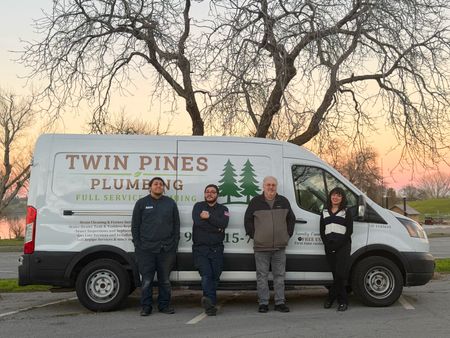
Hello, We are currently evaluating our marketing strategy to improve lead consistency and build deeper community trust. While we currently use Yelp, we find the results inconsistent and often attract price-shoppers rather than long-term clients. :( Moving forward, I would like to pivot our focus toward community-based marketing, such as sponsoring local schools and Little League teams. These sponsorships build the kind of long-term goodwill and trust that ensures local homeowners think of us first during emergencies. To clarify our strategy, we are avoiding the following channels: - Lead Aggregators (Angi, Networx, HomeAdvisor): These platforms sell the same lead to multiple contractors. The requirement to respond within seconds to avoid losing the job—while still being charged—does not align with our workflow. - Yelp for Major Projects: Due to high cost-per-click metrics and a high volume of price-sensitive inquiries, we find this to be a low-return channel for larger plumbing jobs. Your Friendly Neighborhood Plumbers,178Views3likes14CommentsBanking with a Credit Union vs a Large Bank
Your Bank Should Work With You — Not Just Hold Your Money I used Navy Federal for my business for a while. Honestly, it was fine — until it wasn't. Someone got into my account and started sending money out. That's when I found out just how unprepared they were to handle something like that. Every person I talked to had a different answer. No clear process, no consistent protocol — just whoever picked up that day making it up as they went. The security stuff alone was wild. I went in to do a wire transfer and nobody asked for secondary ID. Went back another time — different employee — and suddenly it was required. Which is it? If your own staff doesn't know the rules, the rules aren't actually protecting anyone. Then to top it off, an employee talked me into doing a cashier's check instead of a wire because he said it would be faster. I took it to my new bank and they put a 7-day hold on it. A week of frozen money because someone gave me bad advice. That whole experience made me realize credit unions — at least the ones I've dealt with — are basically just holding your money. And for a personal account, maybe that's enough. For a business, it's not. What Big Banks Actually Offer That Credit Unions Don't After that mess, I looked into Chase and US Bank. The difference in what they offer for business accounts is significant. ACH verification. You can set up filters so only specific, pre-approved companies can pull from your account. If something unexpected tries to come through, it gets blocked. Navy Federal had nothing like this. Check verification (Positive Pay). You upload the checks you've issued. If a check comes through that doesn't match, the bank flags it before it clears. Simple concept, big protection. Wire transfer controls. Large banks have actual multi-step verification for wires — callbacks, dual authorization on large amounts, confirmation steps that make it hard to accidentally send money somewhere wrong. Not "ask for ID sometimes." Business credit. This is a big one. Credit unions tend to have low limits, limited products, and not much flexibility. Big banks have dedicated business credit cards, lines of credit, SBA loans, equipment financing — actual tools to help your business grow. If you ever need capital, a credit union is going to hit a ceiling fast. Online banking built for business. Multiple users with different permission levels, QuickBooks and Xero integrations, real-time alerts, the works. A lot of credit unions are running systems that feel like they were built for a personal savings account. 24/7 support. Something goes wrong Friday night — you need help Friday night. Big banks have business banking lines around the clock. Credit unions are often a Monday morning call back.16Views0likes0CommentsWhat's Standard Gross Profit for Your Industry?
I once listened to Tom Reber preach about 50% gross profit and how if you aren't aiming for that, you are going to hurt yourself short/ longer term. He was basically saying, for every dollar you make, you need to make two. This has been super impactful for me and my business but I'm noticing on my really big projects, it's so hard to keep that. I have one $120k exterior BBQ that has definitely had some inefficiencies but we are probably looking at 35% end of day. But that's 35% of a large $$ so that is kind of ok. For those of you who do a good job tracking this (btw Jobber's gross profit calculator is objectively amazing for this btw)- what is your gross profit and what do you usually shoot for?86Views0likes1CommentWhat funding programs actually helped your business grow and which ones should you avoid?
I own a residential/commercial cleaning and interior painting company in Indiana and I’m trying to grow responsibly. Between equipment, payroll, insurance, marketing, and vehicle costs, expenses add up quickly. I’m looking for legitimate grants, low-interest funding, or small business assistance programs that actually helped your company grow — especially for service businesses. Any real experiences, recommendations, or programs to avoid would be appreciated.103Views3likes3CommentsHow Understanding Gross Profit Changed My Business
For a long time, I thought I was doing everything right. Work was coming in, the crew stayed busy, and the revenue numbers looked solid. But every month I was stressed about money and I couldn't figure out why. It wasn't until I really sat down and looked at my numbers that things started to click. I came across Tom Reber's work, and it completely changed the way I thought about pricing. The biggest thing I took from it was understanding gross profit — not just revenue, not just what a job "feels like" it's worth, but what's actually left after you pay for labor and materials. Once I understood that number, I realized I had been leaving a lot of money on the table for years. What I Learned Gross profit is the money left from a job after you cover your direct costs — labor and materials. That number has to be healthy enough to cover everything else it takes to run your business: your truck, insurance, tools, software, your time. If your margin is too thin, all of that comes out of your pocket and you never get ahead. For me, setting a clear gross profit goal on every job was the turning point. It gave me something to price toward instead of just guessing and hoping it worked out. What Changed I stopped pricing jobs to win them and started pricing them to actually make money on them. Some bids I lost. But the ones I won started feeling worth it. Cash flow got easier. I could actually see where the money was going — and more importantly, where it was staying. It wasn't an overnight fix, but getting honest about my numbers was the first step to building a business that felt sustainable instead of just busy. If you've been in that same spot — working hard, staying booked, but still wondering where the money went — start by looking at your gross profit on every job. It might surprise you.28Views0likes0Comments