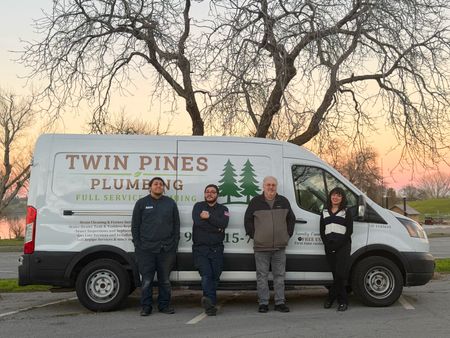
What marketing channel works best for you right now???
Hello, We are currently evaluating our marketing strategy to improve lead consistency and build deeper community trust. While we currently use Yelp, we find the results inconsistent and often attract price-shoppers rather than long-term clients. :( Moving forward, I would like to pivot our focus toward community-based marketing, such as sponsoring local schools and Little League teams. These sponsorships build the kind of long-term goodwill and trust that ensures local homeowners think of us first during emergencies. To clarify our strategy, we are avoiding the following channels: - Lead Aggregators (Angi, Networx, HomeAdvisor): These platforms sell the same lead to multiple contractors. The requirement to respond within seconds to avoid losing the job—while still being charged—does not align with our workflow. - Yelp for Major Projects: Due to high cost-per-click metrics and a high volume of price-sensitive inquiries, we find this to be a low-return channel for larger plumbing jobs. Your Friendly Neighborhood Plumbers,448Views3likes15CommentsAre You Building a Business or Just Creating Yourself Another Job?
It’s easy as a small business owner to get caught up doing everything yourself. At what point do you start delegating, hiring, or putting systems in place so the business can operate without you being involved in every job? I’d love to hear how other owners are making that transition while still keeping quality and customer service high.233Views1like5Comments
💡FEATURE REQUEST: Price Increases in Products & Services List
Do you increase prices for ongoing customers? Do you know how long it takes me to increase my prices for 700 ongoing clients in my cleaning business? Whether you increase your prices on an annual basis or just as needed in these unpredictable times, it would be easier to make these changes en masse in the Products and Services tab! How would it work? When editing a product or service line item in the Products & Services List, there should be an option to carry that modification over to any existing Jobs that have that line item on it. Currently, this would only update for new jobs created, but I'd love to see a little pop-up that says, "Would you like to change the price for existing Jobs with this line item? Yes/No" Use Case Example: Because I am in the cleaning industry, it will be my primary use case. Let's say you have a minimum price that every client's rate will be at or above. When you create a new job for a recurring customer, you add a line item titled "Minimum Rate + current year," like for 2020: "Minimum Rate 2020," which is $150. You also add another line item based on how your pricing model is set up - in this case, I will use a simple one: "Small House" for $10 "Medium House" for $30 "Large House" for $50 When it's time for your prices to increase, consider the following options: you could decide to raise prices only for people with large houses and keep your minimum rate the same, or you may want to increase the cost for clients who have been with you for more than 5 years. Instead of making this change one client at a time and trying to sort through who the change applies to, I could go to the Products and Services List and find the specific line item I want to modify. Then, I could edit the price in there! Ta Da! You've raised your prices! Why should Jobber care? This would be huge for any business industry that has recurring clients. ServiceTitan, Housecall Pro, and other competitors already have this feature. I have found other threads that mention something like this or frustrations with how to go about raising prices. This would allow businesses that only see customers once or twice a year to set up their customers as recurring with one Job, saving them a lot of time and effort as well. You'd have at least one very loyal customer in me! I've spoken to two support agents who thought this was a simple but fantastic idea! My next price increase is in June, and I'd love you guys if you saved me weeks worth of work in a single click 🤞🙏 QUESTIONS, COMMENTS, FEEDBACK, AND MORE USE CASES WELCOME!!1KViews2likes12CommentsService Agreement Ideas for Project Based Businesses
This one has got me racking my mind. One thing they always talk about when you are building enterprise value in a business is having predictable revenues. I think for something like window washing, lawn care, poop scooping etc it'd be easy to have predictable revenues because it's pretty straightforward to have a re-occuring service agreement. But what about us GCs? I originally thought I could get people with a membership for a percentage off jobs. This seemed like a good idea till the first two people to sign up only did so because they had large $40k plus jobs so it was a no brainer (it paid for itself 2x over). If I tried to make the percentage off smaller, it wouldn't be enticing enough to get people interested. Let's brainstorm here guys - what can a general contractor do as a monthly or quarterly service to get in to the service agreement game?127Views1like2CommentsWould you fire a difficult customer even if they spend a lot?
I have this one custome who is very very supportive of what I do but can be very difficult ALL THE TIME, even when I do every thing the way he likes it its never up to par and there's always something thats wrong. It can be difficult at times specially when Im pressed for time and have other customers waitingSolved354Views1like12CommentsPayment Nightmare: Should Contractors Require a Deposit Before Starting a Job?
I recently had a job where the customer tried to pay in various formats and payment was never able to go through. I ended up leaving and hoping they would pay at a later date. Thankfully they did pay a few days later. How do others go about this potential issue? I have thought it may be a good idea to require a small deposit to make sure payment is able to be made before the job is started.470Views2likes14Comments
$100K lesson - What contract language protects contractors when hidden conditions change the scope of a renovation job?
Hey all, first post. I'm Chad, founder of Great Raven Renovations Ltd. We're based on Salt Spring Island, BC, and run renovation, roofing, decks, and structural work across Salt Spring, the Cowichan Valley, and South Nanaimo. Started the company in January 2022 after walking away from a stable off-island job rather than compromise how I wanted to work. Almost four years in now. Has been a hard, useful run. The reason I'm here: most of what I've learned came the expensive way. Over those years I've put well over $140,000 into building this business — and lost more than $100,000 of it. Failed hires who couldn't hold a craftsmanship standard. Clients who exploited weak contract language to underpay or walk on finished work. Each one left a mark. What changed isn't that we got smarter on people — it's that we built a system around the kinds of losses that almost killed the company. A few of the pieces that came directly out of disputes: Hidden-conditions clause in the master contract. Written after a project where opening a wall doubled the real scope and the client refused to acknowledge it. Signed change orders with price and schedule impact before work happens. Written after a job where verbal "just add this" requests turned into three weeks of unpaid labour. Before/during/after photo record on every job, including substrate conditions. Written after a homeowner claimed two months post-completion that something was never done — when in fact it was, and we had nothing to prove it. Completion walkthrough before the final draw is invoiced. Written after a final-payment dispute that should have been a 10-minute conversation on site. One accountable point of contact (me) instead of a rotating dispatcher. Written after we tried it the other way and watched communication fail in real time. None of that came from a course. It came from losses. The process exists because of disputes, not in spite of them. Curious how others here handle this — specifically the hidden-conditions problem. On older island homes we open walls and find things nobody could have priced. What language are you using in your contracts to protect both you and the homeowner when the unknown shows up? Anyone landed on wording that actually holds when a client pushes back? Appreciate the community. Looking forward to learning from you. — Chad Great Raven Renovations Ltd. Salt Spring Island, BC178Views0likes3CommentsBanking with a Credit Union vs a Large Bank
Your Bank Should Work With You — Not Just Hold Your Money I used Navy Federal for my business for a while. Honestly, it was fine — until it wasn't. Someone got into my account and started sending money out. That's when I found out just how unprepared they were to handle something like that. Every person I talked to had a different answer. No clear process, no consistent protocol — just whoever picked up that day making it up as they went. The security stuff alone was wild. I went in to do a wire transfer and nobody asked for secondary ID. Went back another time — different employee — and suddenly it was required. Which is it? If your own staff doesn't know the rules, the rules aren't actually protecting anyone. Then to top it off, an employee talked me into doing a cashier's check instead of a wire because he said it would be faster. I took it to my new bank and they put a 7-day hold on it. A week of frozen money because someone gave me bad advice. That whole experience made me realize credit unions — at least the ones I've dealt with — are basically just holding your money. And for a personal account, maybe that's enough. For a business, it's not. What Big Banks Actually Offer That Credit Unions Don't After that mess, I looked into Chase and US Bank. The difference in what they offer for business accounts is significant. ACH verification. You can set up filters so only specific, pre-approved companies can pull from your account. If something unexpected tries to come through, it gets blocked. Navy Federal had nothing like this. Check verification (Positive Pay). You upload the checks you've issued. If a check comes through that doesn't match, the bank flags it before it clears. Simple concept, big protection. Wire transfer controls. Large banks have actual multi-step verification for wires — callbacks, dual authorization on large amounts, confirmation steps that make it hard to accidentally send money somewhere wrong. Not "ask for ID sometimes." Business credit. This is a big one. Credit unions tend to have low limits, limited products, and not much flexibility. Big banks have dedicated business credit cards, lines of credit, SBA loans, equipment financing — actual tools to help your business grow. If you ever need capital, a credit union is going to hit a ceiling fast. Online banking built for business. Multiple users with different permission levels, QuickBooks and Xero integrations, real-time alerts, the works. A lot of credit unions are running systems that feel like they were built for a personal savings account. 24/7 support. Something goes wrong Friday night — you need help Friday night. Big banks have business banking lines around the clock. Credit unions are often a Monday morning call back.38Views0likes0Comments