Strategies / Suggestions for hiring manual labourer for a niche Biz.
Fitness Equipment Service Technician - Rock & A Hard Place 26 yrs at this and I cannot find my A-Player. Sorry, this is quite the essay from the heart of frustration, so if you make it to the end and have some valuable suggestions I can implement, beers are on me at this conference. 🍻🍻🍻 It’s been beyond frustrating with people lying on resumes until you see they can’t do what they say. OR They can’t follow the simplest of instructions and policies like... If ever unsure about what you're doing or need help of any sort, contact me, I’m ALWAYS available. Then they decide to go Cowboy and try to figure it out themselves, which I certainly encourage as that's how I learn best. Trial and error where just getting your hands in there, coupled with some well-lubricated gray matter, and things start coming together and making sense. But not to the point of adding additional unnecessary "HRS" not MIN, to an invoice I can’t charge for, but they expect to be paid. In my instructions, I let them know, even when right beside them during training, if they get stumped on an issue and they ask for advice, I tell them to run through some process of elimination and try to figure it out themselves without me constantly telling them. I'll let them go for 10 to 15 minutes, and if the lightbulb isn't flickering, then I'll methodically walk them through what I would do. This way I'm not just jumping in and doing it for them, but they're actually learning hands-on. It's when they decide to go cowboy rogue and spend way too much time trying to figure it out instead of calling me, then they expect to be paid for these hours I can't bill back to the customer. How do I tell my customer that we're overcharging them because my guy doesn't know what he's doing and wants to learn on their equipment Then he'll make a note of whatever the issue is and what their diagnosis is, which can include needing to order parts. I'm thinking that they didn't have an issue with the diagnosis and it was a cut-and-dry scenario and, hands-down, this is what the customer needs. Then we'll order wrong parts... not only costing money—which will be either out of my pocket or the customer's pocket upfront if the quote is over $1,000—we have to wait usually about a week for parts to come in, set up another appointment, and head back out to the location to rectify the situation. - Part gets installed, doesn't fix the issue, and we're back to square one. Tech expects to be paid for travel & time for his mistake. So I put in the contract that I backpay my techs by two weeks with the clause that this will cover any potential damage to customer property due to their negligence. Residential customers get invoiced and are expected to pay more or less immediately, and commercial customers are net 30 for the most part in a perfect world. So it kind of evens out to cover their pay if something were to happen. So what do I tell my customers now? "Sorry, my guy effed up. Now I have to go out there and diagnose it properly, and if you're lucky—which happens more times than not—it's just a matter of some adjustments that need to be made, and no part was needed after all." But the other side of that coin is a part is actually needed, so we have to run through the process again and face another week's delay. Then I feel in good conscience that I need to discount my customer and hope this hiccup isn't enough to lose them and they're gracious enough to understand. OR Lack of communication in general. I can't stress enough and tell them it’ll make us or break us if honesty and just pure, actual communication isn’t kept up. I make it very clear that if they're not happy with how things are going, my door is open and I am more than happy to discuss what's going on so that we can make an adjustment that works for both of us. 'Cause if I don't know, I don't know. And that goes two ways. I let them know I'll do the same for them. So it boils down to the fact that if they can't do it right, I might as well do it myself? PSA - common sense is not so common. LOL I refuse to drop my standards as we do charge a premium, and I would consider us to be a "boutique" service company as we have—or I should say I have—an incredible track record and can probably still count on one hand how many callbacks I've ever had. Even though we are the highest-charging company locally, if not regionally, I make sure that I add enough value to the customer so that they know they got their money's worth and then some. So how do I justify that when I have subpar techs going out and serving these customers with guarantees that I've made that don't get fulfilled? I tried doing the employee thing once and that was an absolute nightmare, so I only look for contractors now. I'm willing to pay good money for somebody who can prove themselves to me. If they have the drive and are willing to learn and be moldable, then they can increase their pay in a short amount of time. !!!!! So you can only imagine, after 26 years of working on the tools and without seeing any hope of getting off the truck in the near future, my drive, my mental, and my physical well-being are being stressed to the max! I even had a scare of a panic attack, so I was told. That kind of shit just is not in my vocabulary or in my DNA, but I was getting signs that were pointing towards a heart attack that did put me in a hospital for a day, but I checked out just fine. SO... FWD to today, things have gone from bad to worse. Financially, I can't even hire anybody in order to pay them as I can't even bring in enough to cover our own payroll, yet the hours that I work, no sane human should have to be exposed to. No word of a lie, I'm on the tools all day, usually starting at about 9–10 AM. I get home around 7–10 PM, just in time to kiss my favorite wife, give my teenage son a hug as he goes to bed, and then I'm on the computer catching up on the office work from the day and days past until usually around 5 AM seems to be the new norm. Up at about 8 AM—rinse and repeat my Groundhog Days. My loans & CCs are all maxed out constantly, and I just have no idea what happened to this dream drive I had to be the best in the industry and to truly make a change and grow this company to the vision I once had. UGH. I probably shouldn't even be coming to this event, but IDK, maybe there's something here that's going to allow for some transformation and growth to finally happen. AND GO000!!! I am all ears and moldable to learning and implementing any kind of positive criticism. MUCH appreciated! 👊128Views3likes5CommentsThe First Impression: What Makes Someone Choose Your Business?
Before a customer ever hires you, they’re already judging your business through your website, reviews, social media, phone calls, and communication. What’s one thing you believe helps turn a potential customer into a paying customer?Solved116Views2likes6CommentsHow to celebrate top talent?
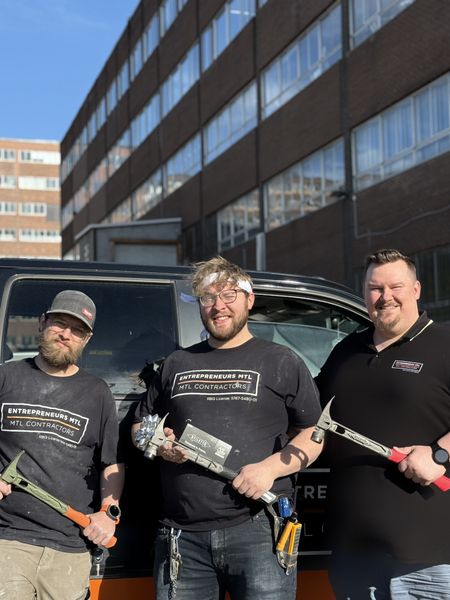
The more the team grows, the harder it is to keep up with every birthday and "work-iversary" (the day they first started with us). Celebrated one of our top carpenters today by getting him one of the best hammers on the market. It's a small gesture that cost 500$ but it seems to have meant a lot to him. Curious to hear how people celebrate their crew. When? What do you do? What works vs what doesn't?267Views7likes12Comments
Claim your Territory!
Hello Jobber Community, My name is Mario Visin, Founder of Group7 Home Services LLC. We joined the Jobber community with a spirit of collaboration, learning, and service to the home services professionals who keep our homes, neighborhoods, and communities running. I believe the home services industry is entering one of the most important seasons in its history. Blue-collar workers are becoming entrepreneurs by the thousands. Handymen, roofers, painters, landscapers, installers, restoration experts, and specialty trade professionals are no longer just working jobs — they are building businesses, serving families, and creating the foundation for generational opportunity. The home services industry represents hundreds of billions of dollars in economic activity each year. Large suppliers, big-box retailers, and national construction brands have created tremendous wealth from this industry. Yet the heart of the industry has always been the person swinging the hammer, climbing the ladder, knocking the door, answering the emergency call, and doing the work that homeowners depend on. That person is you. That person is me. That person is the blue-collar professional who deserves better systems, better connection, better opportunity, and a clearer path toward building a meaningful life through the trades. One thing I have noticed across many industries is that people often struggle to connect with one another in ways that truly make a difference. We are entering a time where connection and community will matter more than ever. The future will not only belong to the biggest brands or the largest companies. It will belong to those who learn how to connect, serve, collaborate, and build trust with one another. At Group7 Home Services, we are designing a Live-Work-Play vision for the trades — a curriculum and platform strategy focused on helping home services professionals serve one another, grow together, and build wealth through shared relationships, better systems, referral opportunities, and a service-first mindset. This is not just about jobs. It is about lifestyle. It is about family. It is about creating a future so compelling that the next generation sees the trades as a path of pride, ownership, entrepreneurship, and purpose. Strategy matters. Systems matter. Technology matters. But the real transformation begins when good people come together with humility, discipline, and a desire to serve the need before serving the self. I believe larger technology companies serving the trades, including platforms like Jobber, play an important role in this new era. The right technology can help blue-collar entrepreneurs run smoother businesses, communicate better with customers, organize their teams, and create more professional experiences for the homeowners they serve. But technology alone is not the full answer. The real power comes when technology, community, service, craftsmanship, and vision meet at the same table. Group7’s broader mission is Building Thriving Cities by helping people connect around housing, entrepreneurship, education, and local economic opportunity. We believe the home services professional has a major role to play in that transformation because every strong city begins with strong homes, strong workers, strong families, and strong relationships. I am a visionary, and I understand that vision must be protected, refined, and shared with care. But I also believe the home services industry is ready for a new conversation — one centered on dignity, ownership, connection, and a higher conscious level of capitalism where the smaller parts come together to create something greater than any one person could build alone. The big brands we know today started with a dream, a strategy, and a willingness to work for decades. The next great wave of wealth creation may come from like-minded people linking their common threads together, weaving a much larger blanket of opportunity for families, workers, entrepreneurs, and communities. Being part of a community is just the beginning. How we connect matters. Relationships are everything. Work like your life depends on it. Best, Mario Visin Founder, Group7 Home Services LLC96Views1like2Comments
Is hiring freelancers for admin work worth it? What's your Take?
Has Anyone Used UpWork to Hire Affordable Freelancers for Admin Work/other jobs? I’m curious if anyone here has used UpWork to hire low‑cost freelancers for administrative tasks in their business. A few friends have recommended it for things like scheduling, data entry, inbox management, and other behind‑the‑scenes work — but I’ve never tried it myself. Before I dive in, I wanted to see what this group thinks. Have you used UpWork for admin help? Was it worth it? Any tips, red flags, or success stories? Appreciate any insight from those who’ve been down this road.91Views0likes2Comments
Tell your team the client's name before every job. Not just the address.. the name.
When my crew knows they're cleaning a yoga studio where people show up barefoot at 6AM, or a luxury flagship that opens in 48 hours, they stop thinking about the mop. They think about the standard. That one shift changed everything at for us. The other thing I do, after every job I call out one person by name in our group chat. Not "great job team." Specific. Public. Real. Most of my crew has never had a manager notice their work. When I do, they show up differently every single time. Recognition costs nothing. It builds everything. Cat C- Founder & CEO, Civic Spark Cleaning Co|114Views1like2CommentsThe Quickest Firing I've Ever Done (And What I Should Have Done Differently)
In the trades, we talk a lot about "hire slow, fire fast." I've lived by that principle — long applications, phone screens, in-person interviews, and working alongside our team for a couple of shifts before anyone flies solo. As a skilled labor company, I need to know someone is reliable before I trust them on their own. So when I let someone go recently after just a handful of days, it wasn't a surprise to me. What was a surprise was how much of that situation I had created myself. Here's what happened: I'd gone through the full process with a candidate who looked great on paper — strong experience, excellent finish work, exactly the shower remodeler we were looking for. There was a lot of back and forth on his start date since he was wrapping up another project, and when he finally said he could start on a Friday, I jumped at it even though my schedule was a mess that day. Instead of doing a proper onboarding, I handed him off to my operations manager and told myself we'd sort out the details later. We didn't sit down together to go over expectations, I never walked him through Jobber, and — maybe worst of all — I never confirmed that his new hire paperwork was actually completed. I sent it. I just never followed up. He worked a couple of shifts and the feedback was decent — promising, but still being evaluated. Then Tuesday came, and because we hadn't properly briefed him on the schedule or made sure he understood how our system works, he showed up to a unit turnover job with no context. He felt blindsided, and honestly, I get it — he came on as a bathroom remodeler. His reaction, though, was the problem: attitude with the crew, visibly disengaged at our team meeting, and a text to me saying he couldn't trust us. That was enough. I let him go, and I'm confident it was the right call — his attitude made it clear it wasn't going to work. But I also have to be honest: we didn't give him — or ourselves — a fair shot. The lesson I'm taking away isn't just "fire fast." It's that hiring slow has to extend all the way through onboarding. I was so eager to get him into the pipeline that I skipped the very steps that exist for good reason. If I couldn't carve out the time to do a proper onboarding — paperwork signed, systems explained, expectations laid out clearly — I should have pushed the start date until I could. Going forward, I'm building out a simple onboarding checklist so that no matter how busy things get, nothing gets skipped just because I'm stretched thin. A great hire can become a problem hire real fast when you don't set them up to succeed.83Views1like2CommentsIs it good to sub-contract work or hire permanent employees?
Hello everyone Running multiple basement full renovation and I have been hiring people and doing the jobs but at time I feel it's way more easier if I sub-contract the work, much lesser stress. Any advice on which one is better would be really helpful. Thank you.241Views4likes6Comments