When do you offer discounts or "discounts"?
In home services, it can feel like customers are always looking for a deal. But after years in the business, our approach is pretty simple: we don't discount. Not because we're rigid — but because our pricing is already fair. We charge what the job is worth, and we stand behind that number. The only times we'll budge: If something goes wrong on our end — If we made a mistake or fell short, a discount is the right thing to do. It's not a handout, it's accountability. If we have to reschedule — Life happens. If we're the ones pushing a job back, we think it's only fair to make that right for the customer. Outside of those two situations? We hold firm. I've heard some people "discounting" on the invoice as a pricing strategy but it's not actually a discount. When you discount freely, you train customers to always ask. You undervalue your work. And honestly, the customers who only show up when there's a deal aren't usually the ones you want long-term. The right customers understand that quality costs what it costs. What about you? Do you have a rule for when discounts are on the table, or do you play it by ear? Would love to hear how other home service businesses handle this.101Views1like5CommentsWhat funding programs actually helped your business grow and which ones should you avoid?
I own a residential/commercial cleaning and interior painting company in Indiana and I’m trying to grow responsibly. Between equipment, payroll, insurance, marketing, and vehicle costs, expenses add up quickly. I’m looking for legitimate grants, low-interest funding, or small business assistance programs that actually helped your company grow — especially for service businesses. Any real experiences, recommendations, or programs to avoid would be appreciated.79Views3likes3CommentsWhen is it time to hire an accountant?
I am wondering at what point some of you guys have hired an accountant? Did you hire one to grow? To maintain what you have? Or are you simply using one to file taxes at the end of the year? I am thinking about hiring an accountant to manage my finances for me and see where things go, but wondering when is the right time.162Views2likes2CommentsHow Much Should You Really Be Charging?
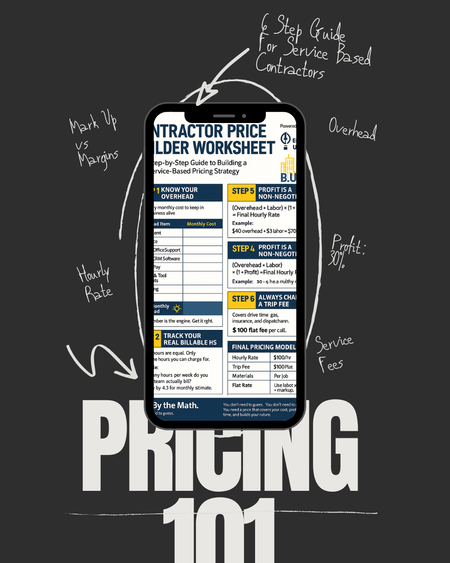
The number one question I receive is tied directly to the fact, most contractors are still guessing when it comes to pricing. Overhead. Profit. Labor rate. Trip fees. They think just because they throw a number they hear their competitors use, thats all that they need. It may work, but how and what do you divide these funds is just as important for your business health. If you don’t know how to do the math, you’re not building a business. You’re surviving check to check and think you need more work, when you do not. So here’s the plan: This Tuesday & Thursday on IG, I’m walking you through our Contractor Price Builder Worksheet FREE on instagram live. We will cover: - How to calculate your real hourly rate - The difference between markup and margin - Why profit is a non-negotiable - And how to price with confidence Join the session. Bring your numbers.1.4KViews3likes23CommentsReal Reason Most Contractors Don’t Know Where the Leak Is (How to Price)
Just returned from the Masters of Home Service Podcast with Adam and we broke down something every contractors pain point... Most of us think our pricing problem is about charging more. But in reality, it’s about not knowing where the leak is. That’s why I built the Pricing Blueprint Worksheet, it forces you to look at every category inside your business: Is your hourly cost set right? Is your team milking jobs or burning hours? Is your overhead eating too much of your margin? Are your profit targets too low? Or are you just lost trying to figure out where it all goes? When you separate these categories, you finally see where your money ends up. You’ll know if it’s a labor problem, an overhead problem, or a leadership problem. This is exactly what we talked about on the podcast, that transition from employee mindset to owner mindset. Thank you Jobber Team for the opportunity. Here is the sheet we went over and let me know your thoughts.184Views1like2Comments
Home Services Assessment Fee
Hi everyone, I'm looking for advice on how to clearly and professionally communicate to potential clients that I charge an onsite assessment fee before moving forward with an assessment scheduling. For those of you who charge a similar fee, how do you usually bring it up in conversation? Do you include it in your Jobber quote or send it separately? Are there any tips on wording or timing that can help set the right expectations without scaring off potential leads? I appreciate any insights; thank you in advance!321Views1like4Comments